Faith-Based Rehab Programs: What to Know Before You Choose One
 Posted on
October 2, 2026
Posted on
October 2, 2026
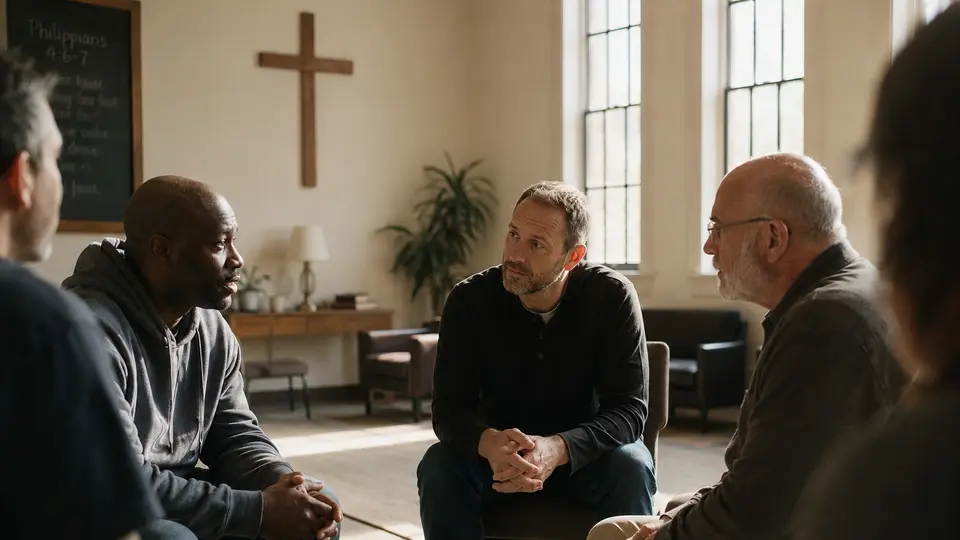
If you've begun to look into treatment options, you'll most likely have seen a large number of faith-based rehabilitation programs appearing in the search results. It's possible that a pastor suggested one to you. Perhaps a family member is a strong advocate for the twelve steps along with scripture study. Or perhaps you're just fed up with the clinical brochures, which seem cold and impersonal and find that something based on faith seems more likely to connect with the person you care about.
For some individuals in recovery, faith-based rehabilitation programs can indeed be a real source of strength. However, the quality, organization, and clinical thoroughness of such programs can differ very greatly. The article examines what these programs are actually like, who generally succeeds in them, and the questions you should ask before making a decision — so that you are making your choice with clear eyes rather than merely on the basis of hope.
This is a general education and not a personal recommendation as to treatment. Since everyone's case is different, the appropriate source for decisions concerning you or your loved one is a qualified provider.
What "Faith-Based" Actually Means (It's Not One Thing)
The term is used in a loose way, and that is one of the reasons for the problem. By 'faith-based rehab' is meant anything from a completely licensed clinical facility which also provides chapel services and has chaplain support to a residential program run entirely by a religious organization and having no clinical staff.
Some common models you'll run into:
- Programs that are clinically licensed and have a spiritual component. These include medical detoxification, therapy, and evidence-based treatment, along with optional prayer groups, faith counseling, or a chaplain on staff.
- Programs that are based on faith. These are usually longer-term and either free or low-cost, focusing on Bible study, worship, and mentorship rather than formal clinical therapy.
- Programs similar in structure to conventional twelve-step recovery programs that have a religious orientation.
It is more important to know what category a program belongs to than the "faith-based" label.
Why It Appeals to Some People — and What It Actually Offers
For a person who already has a well-established faith identity, rehabilitation based on that faith tends to sound less like a clinical procedure and more like returning to something they are used to. Genuine support for staying sober is often provided by a sense of purpose, community, and moral structure.
Consider the case of a man in his thirties, who had been brought up in a tight-knit church community, and who first attends a secular outpatient program. He discovers that the language used there is lifeless — things like "coping mechanisms," "triggers," and "relapse prevention plans" — and as a result drops out of the program. He subsequently joins a faith-based residential program in which recovery is based on forgiveness, surrender, and reconstructing his relationship with his church. The structure is almost the same as that of the standard twelve-step model. The only differences are in the language and the community surrounding him, and these changes are sufficient to keep him involved.
The true value that faith-based programs have to offer is engagement; people are more likely to stay if they feel they are being spoken to rather than going through the motions.
Where Faith-Based Programs Can Fall Short
It's the section you should take the time to consider, since it's the one where families end up being harmed.
It is not the case that all faith-based programs have clinically qualified staff; some of them depend completely on volunteers, mentors, or clergy who have no formal training in the treatment of substance use disorders. This can indeed be a serious issue for a person who also has a co-occurring mental health condition, a history of trauma, or a substance use disorder severe enough to require medical detox.
A few specific gaps to watch for:
- There is no medically qualified personnel present, a point which is important for anyone who is at risk of experiencing dangerous withdrawal.
- There is no provision for individualized treatment planning since some programs employ the same curriculum for all people, no matter what their history or diagnosis is.
- Viewing recovery merely as a matter of spirituality or morality, which can lead into shame-oriented messaging instead of focusing on treatment.
- Little to no aftercare planning once the program ends.
This doesn't show that faith-based programs are in any way inherently inferior. It only means that the label by itself doesn't tell you what you're actually getting—you have to look more closely.
Questions to Ask Before Choosing a Program
Before enrolling yourself or a loved one, it's worth getting direct answers to a few things:
- Is the facility licensed and accredited as a treatment provider or is it a religious organization not holding clinical licensing?
- Who makes up the staff—licensed counselors, medical professionals, or mainly volunteers and mentors?
- Can medical detox be arranged on-site, or is it necessary to have it take place elsewhere first?
- Does the program check for and provide treatment of any co-occurring mental health conditions?
- What form does aftercare or ongoing care take when the program comes to an end?
- Is it necessary to take part in the particular faith or denomination, or can one choose not to?
It wouldn't be at all impolite to ask any of these questions, even if the program is one run by people you trust. A good program will give clear answers without being defensive.
Faith and Clinical Care Don't Have to Be Either/Or
A particularly valuable development in this area is the increasing number of hybrid programs—these involve licensed clinical treatment combined with a true and well-integrated spiritual element, rather than the two being seen as substitutes for one another. For a person whose faith is an essential part of who they are, this kind of combination can provide the best of both worlds: on the one hand, proper medical and therapeutic care and, on the other, the sense of community and meaning that faith brings.
A program that you are thinking of joining, if it is entirely based on spiritual principles and has no clinical basis, still has a place; it could prove to be a suitable option after medical stabilization or in combination with outpatient therapy, rather than being the only intervention.
The Bottom Line
Faith-based rehab programs do not form a single category and are not inherently better or worse than secular treatment. What is important is the actual content of the program—namely, who is giving the care, what kind of care it is, and whether it is appropriate for the particular person who needs it. Ask the direct questions and go beyond the label. The correct choice is the one that treats the whole person, including their faith, rather than in place of it.
If you are looking for a way to begin when considering your options, RehabSupportServices.com offers more information on how various treatment models work and on how to decide which one is right for your particular situation.